



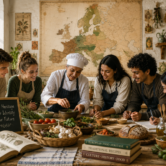
Food tells us a great deal about where people come from, how communities have developed and what they value. Across Europe, recipes carry stories of family, migration, celebration and cultural exchange.
For the GACE Project, gastronomy provides a practical way to explore these connections while encouraging inclusion and greater understanding between communities.
More Than a Recipe
Traditional dishes rarely exist in isolation. Ingredients, preparation methods and customs can travel between regions and generations, gradually becoming part of everyday life in new places.
This makes gastronomy a useful starting point for conversations about identity and cultural diversity. A recipe can introduce learners to the people behind a tradition and help them understand how cultures influence one another.
Social Inclusion Through Food
Sharing food can create opportunities for people from different backgrounds to meet on familiar ground.
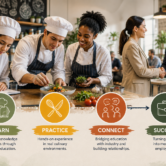
GACE gives particular attention to learners who may experience barriers to education or employment, including young people from migrant backgrounds, students with disabilities, learners requiring educational support and people experiencing social or economic disadvantage.
By bringing different culinary traditions into education, the project aims to present cultural diversity as a source of knowledge and creativity.
Building a European Recipe Collection
One of GACE’s key resources will be a digital collection of 20 culturally significant recipes from at least 10 countries.
The collection will include European culinary traditions alongside dishes from other cultures that have become part of contemporary European life. Each recipe will explore more than ingredients and preparation. It will consider its origins, traditions, cultural meaning and journey between communities.
Culinary Heritage Education Through Video
Each of the 20 recipes will also have a dedicated cultural video.
Rather than functioning only as cooking tutorials, these videos will explore the people, memories and traditions behind the dishes. People of different ages, origins and cultural backgrounds will take part, helping present European gastronomy as something living and continually evolving.
Food as Shared Heritage
Europe’s food culture reflects both long-established traditions and generations of cultural exchange.
Through gastronomy education, GACE aims to help learners appreciate these different influences while recognising the values and experiences communities share.
Discover the GACE Project and explore how food, culture and education can help create a more connected Europe.





Comments 03
Mellisa Doe
January 10, 2026As the world continues to fight COVID-19 some property owners are searching for way they can improve the security of their buildings.
Rayan Kellar
January 10, 2026By automating your doors this removes need for people touching handles or surfaces. Both of the above options.
Mellisa Doe
January 10, 2026As COVID-19 continues to pose challenges, many building owners are seeking solutions to enhance safety and security.